
Chief of Army staff General Deepak Kapoor said on Saturday that there has been no increase in Chinese incursions along the Sino-Indian border.

The southern deep-sea port of Hambantota is considered strategically important for its location.
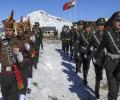
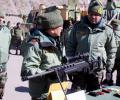
The major general-level meeting discussed ways to implement the disengagement of troops from Galwan Valley as agreed during high-level military talks between the two sides on June 6. The Indian delegation at the talks was led by Leh-based 3 Infantry Division commander Major General Abhijit Bapat. The two sides held Major General-level talks on Tuesday as well.

Chinese state-sponsored hackers had targeted India's power grids in Ladakh possibly for information on India's critical infrastructure or to prepare for sabotage in the future, according to the American cybersecurity firm Recorded Future.
The Chinese aircraft have been regularly flying close to the LAC in the last three to four weeks which is seen as an attempt to probe the Indian defence mechanism in the area.

Jaishankar said, "The immediate part which awaits us is what we call the de-escalation, which is the build-up of forces along the Line of Actual Control."

Army Spokesperson Colonel Aman Anand said troops from China's People's Liberation Army (PLA) 'violated' the consensus arrived at during military and diplomatic engagements on the ongoing standoff in eastern Ladakh, and carried out provocative military movements to change the status quo.

The Indian Army is celebrating the diamond jubilee of the Battle of Walong which is as an example of bravery and sacrifice made by the bravehearts of the force in the face of Chinese aggression in 1962.
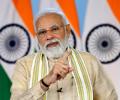
The Congress on Thursday accused the central government of evading a debate on India-China border face-off and asked why the Modi government has been running away from the issue.
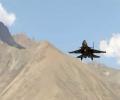
A Chinese Air Force aircraft flew very close to a friction point in the eastern Ladakh sector on the Line of Actual Control in the last week of June, after which the Indian Air Force responded swiftly as per standard operating procedures.

India and China have implemented a pact on patrolling in Depsang and Demchok along the Line of Actual Control (LAC) in eastern Ladakh, as per agreed modalities and timelines. The agreement was reached on October 21 and includes provisions for disengagement and patrolling in the last two friction points in the region. The pact has been effected and implemented as agreed, with both sides resuming patrolling activities and grazing, where applicable, as per longstanding practice before the friction began. The terms of the disengagement agreements reached prior to the latest pact continue to hold in relevant areas in eastern Ladakh. The agreement applies mutually to both sides and is without prejudice to India's positions on the LAC or boundary lines. India and China are each carrying out one round of patrolling in Depsang and Demchok, but they have maintained their deployment of troops along the LAC. The focus now is on de-escalation of the overall situation. The agreement was endorsed by Prime Minister Narendra Modi and Chinese President Xi Jinping in a meeting in Kazan, Russia, signaling attempts to normalize ties.

In a year bookended by intractable conflicts and geopolitical fragmentation, India focused on ramping up military prowess by broadly firming up defence procurement worth Rs 4.22 lakh crore even as Indian and Chinese militaries completed pulling back their troops from border face-off points in eastern Ladakh.

Chinese People's Liberation Army recently made a two-pronged simultaneous incursion by sending its troops into Indian waters in the Pangong lake as well as five km deep into Indian territory through the land route in the same area, according to reports.

'The Chinese thought India would back off. 'They did not expect such a firm Indian response to their expansionist manoeuvre.'
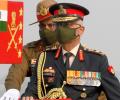
The Army Chief replied in the affirmative when asked by the moderator whether he concurs with Prime Minister Narendra Modi's remarks after the border standoff that the Chinese have not come into control of Indian territory.

'China will do everything to hamper our ability to be a competitor.' 'China wants every country in the region to be subservient and we are the biggest stumbling block.'

The attack is the latest in a string of violence in Pakistan. It comes less ahead of the Shanghai Cooperation Organisation's summit to be held in the national capital.

"Today there is a government in the country which cannot compromise even on one inch of the country's borders," the prime minister added.
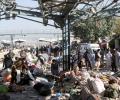
The explosion ripped through the provincial capital Quetta's railway station as passengers gathered on the platform before the scheduled departure of the Jaffar Express to Peshawar.
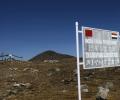
Two men identified as Bateilum Tikro, aged 33 years and Bayingso Manyu, aged 35 years had left home on August 19 and went to the mountains in search of medicinal plants, were reported to be last seen on August 24 by some fellow villagers.

In underlining the role of border villages as custodians of India's frontiers, New Delhi is following China's example in Tibet.
China's state-run media said that the leadership of the two countries successfully solved the Doklam standoff in 2017 with 'concerted efforts and wisdom'.

A monk walks on the hilly road to the monastery in Thiksey village in Leh, November 23, 2021, not far from where the Indian and Chinese armies are locked in a military standoff.

"I am not aware of the information you provided," Chinese foreign ministry spokesman Zhao Lijian said in Beijing when asked about the reports of the Indian casualties at the contested borders. "Our border troops had a high-level meeting and reached important consensus on easing the border situation but astonishingly, on June 15, the Indian troops seriously violated our consensus and twice crossed the border line for illegal activities and provoked and attacked Chinese personnel which led to serious physical conflict between the two sides and China has lodged strong protest and representation with the Indian side," Zhao said.

When Jiang Zemin traveled, as you can see in the photographs here, a Kodak Moment was never far away.

Jaishankar said that both sides also exchanged views on the next steps in the India-China bilateral ties.

India and China on Wednesday held 'constructive' and 'forward-looking' diplomatic talks to resolve the over four-year border standoff along the Line of Actual Control (LAC) in eastern Ladakh but there was clear no indication of any breakthrough.
During the meeting, it was reiterated that "restoration of peace and tranquillity, and respect for the LAC are the essential basis for restoration of normalcy in bilateral relations", it said.

This is the first time in decades that China has made its flight test of an intercontinental ballistic missile public in an apparent show of strategic deterrence, State-run China Daily reported.

Official sources said Tuesday's incident at Pangong and ways to maintain peace and tranquility along the Sino-India border in Ladakh were discussed at length at the border personnel meeting.

The issue "will not affect" the "long-standing" economic and cultural ties between the two countries, a top Chinese official said.
The last time the Chinese military had taken Indian soldiers captive was in July 1962 after a clash in Galwan Valley.

He said China has accrued significant capacities for force mobilisation, application, and sustenance of military operations and maintained the long-pending boundary issue can not be divorced from bilateral relations between the two Asian giants.

'China did not expect India to show such strategic resolve in defending its territorial integrity.'
India on Monday announced it has reached an agreement with China on patrolling along the Line of Actual Control (LAC) in eastern Ladakh, in a major breakthrough in ending the over four-year-long military standoff ahead of a likely meeting between Prime Minister Narendra Modi and Chinese President Xi Jinping in Russia this week.

'India is a huge market for Chinese goods. I don't think a war stands to logic when you have economic compulsions, but then Chinese are known to do illogical things.'
A high-tech Chinese research ship docked at the strategically important Hambantota port departed from Sri Lankan waters on Monday after a controversial six-day visit.

He said if the Chinese military maintains the deployment through the second winter, it may lead to an LoC-like situation (Line of Control) though not an active LoC as is there on the western front with Pakistan.
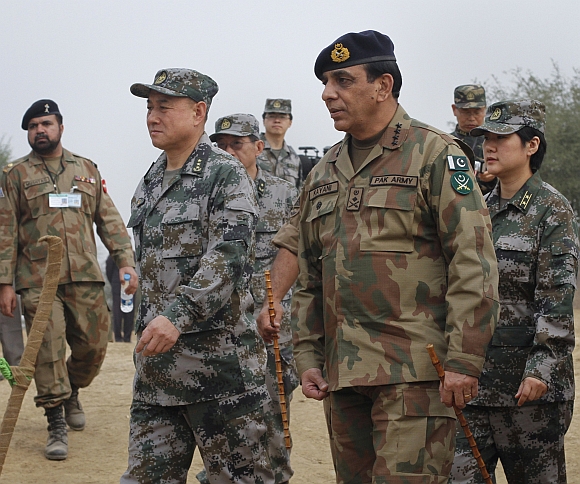
Indian security agencies have learnt that Chinese troops are training Pakistan Army personnel right across the Indo-Pak border in Jammu and Kashmir.

Both sides are fielding the same number of troops for the joint exercises, which will culminate on October.
